
Victorian & geometric floors
Victorian floors, laid the traditional way
Victorian and geometric floors for hallways, front paths, porches and bathrooms, in London and across the UK.

Our approach
Centred, border unbroken
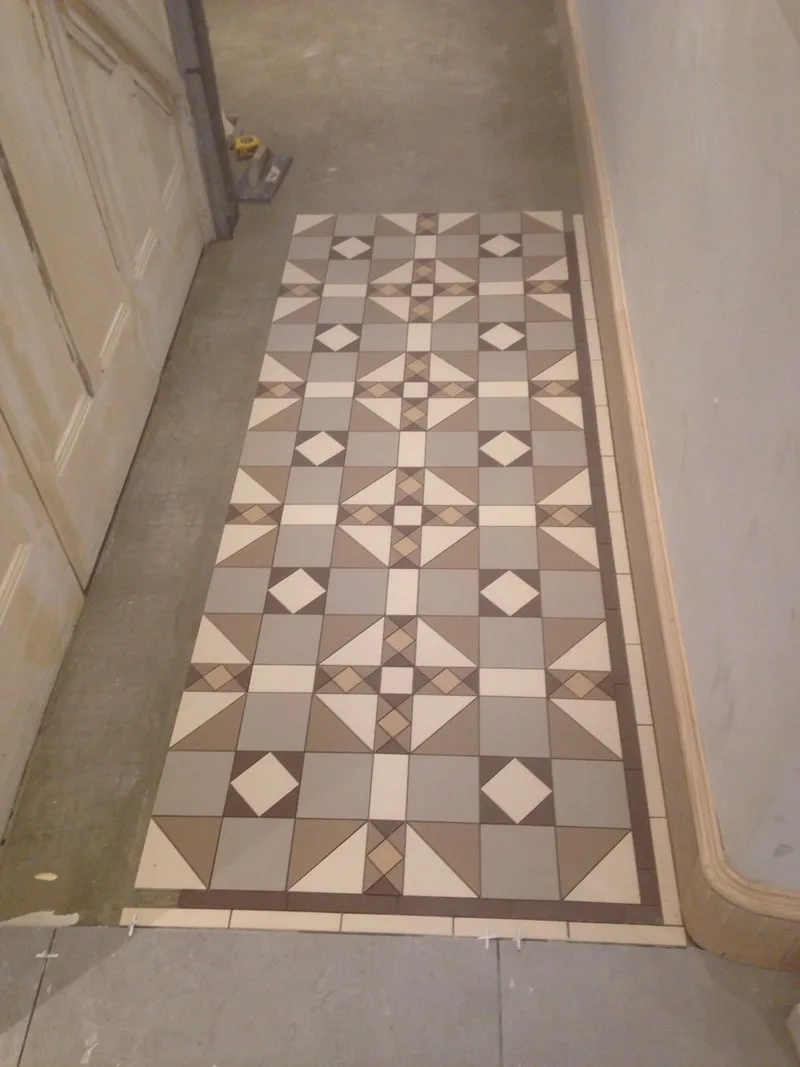
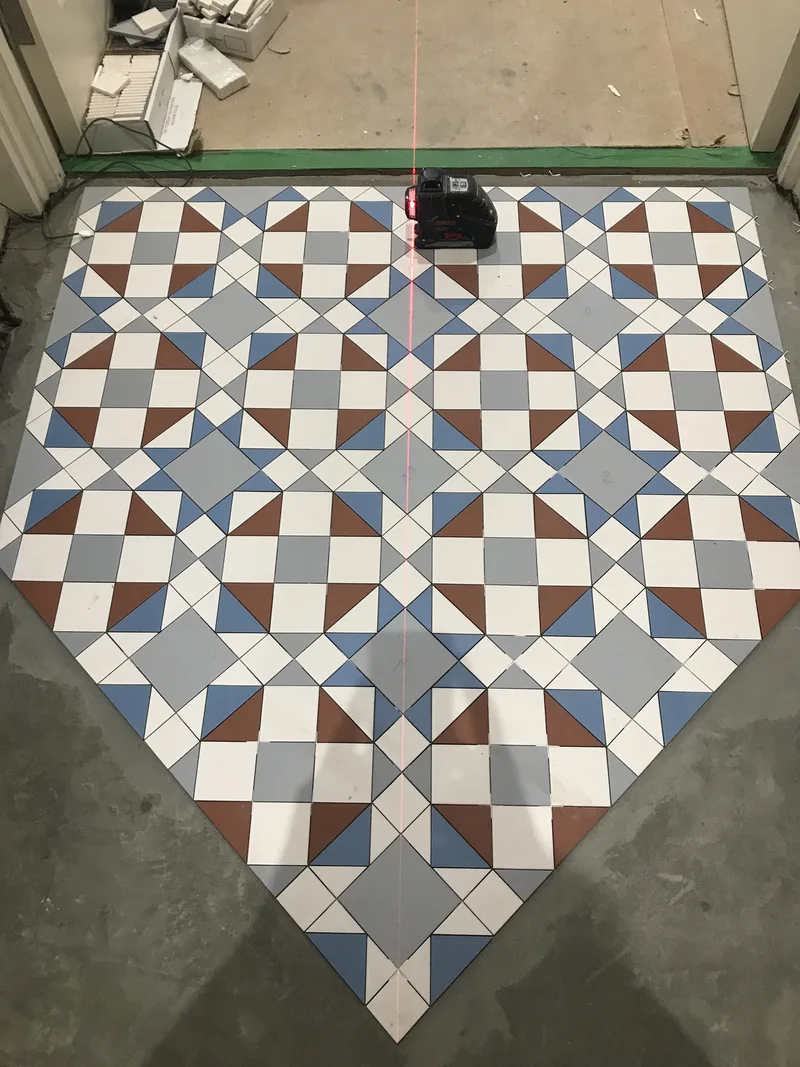
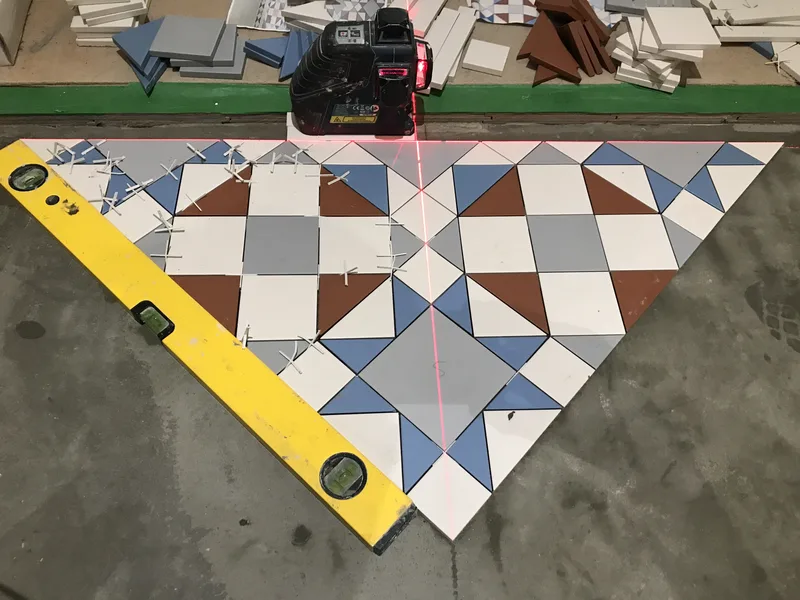
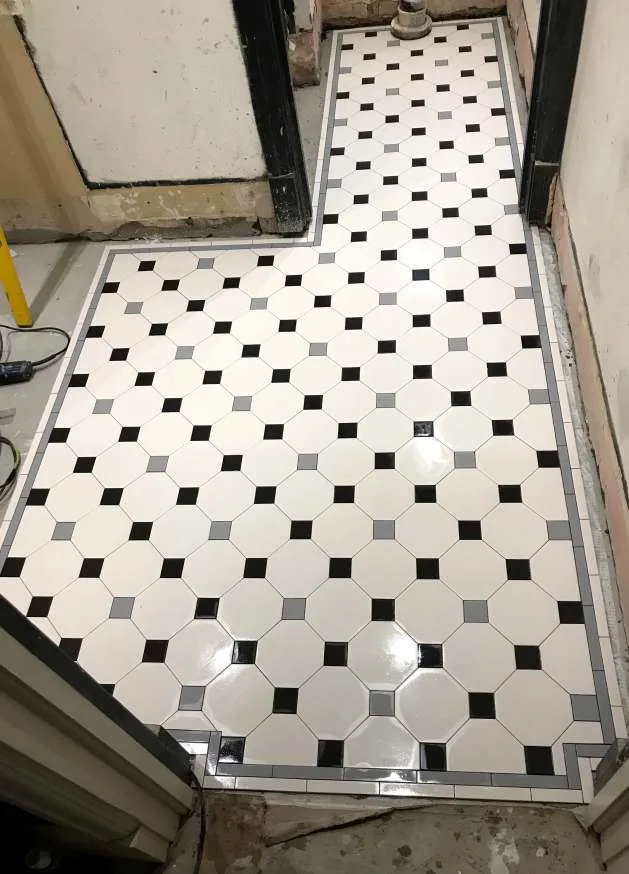
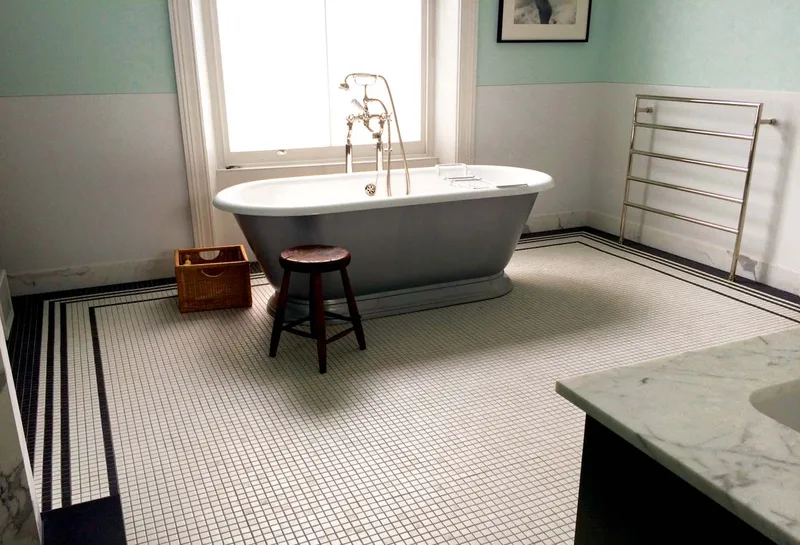
A Victorian floor only works when the pattern is centred and the border runs unbroken. We measure the room, mark centre lines by laser and dry-lay the key pieces first, so cuts fall where nobody sees them.
We lay loose tiles one by one, mesh-backed sheets, or bespoke numbered sheets from London Mosaic, hand-assembled to fit your room with a clear film on top. The base comes first: solid, flat and, outside, drained.
- Hallways, porches, front paths and steps
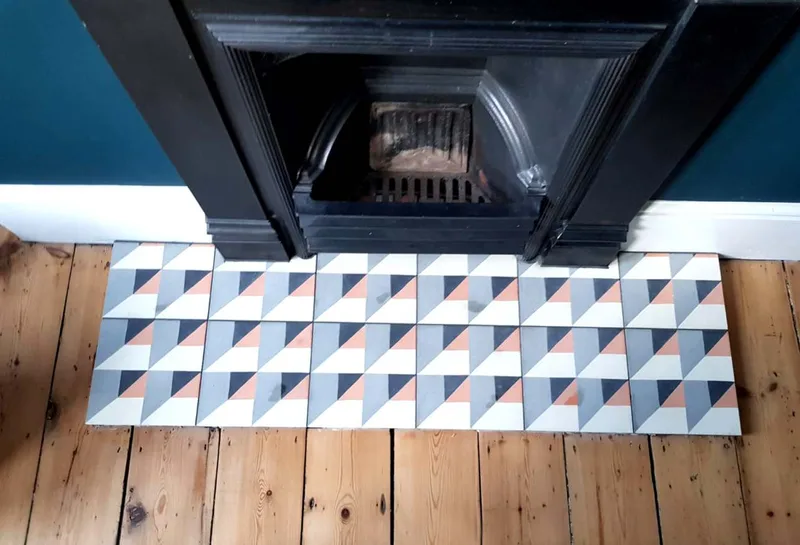
- Tile rugs, borders and fireplace hearths
- Loose tiles, mesh-backed or bespoke numbered sheets
- Laser setting-out from the centre lines
- Grey adhesive and grout for a crisp pattern
- Cleaning, sealing and aftercare advice
The tradition
A very British floor
Victorian tiled floors began with Herbert Minton of Stoke-on-Trent, whose tiles went into the Palace of Westminster. By the 1890s they were in ordinary homes across Britain, and many are still there. We lay them the same way: tiles set close, the pattern centred.
Portfolio
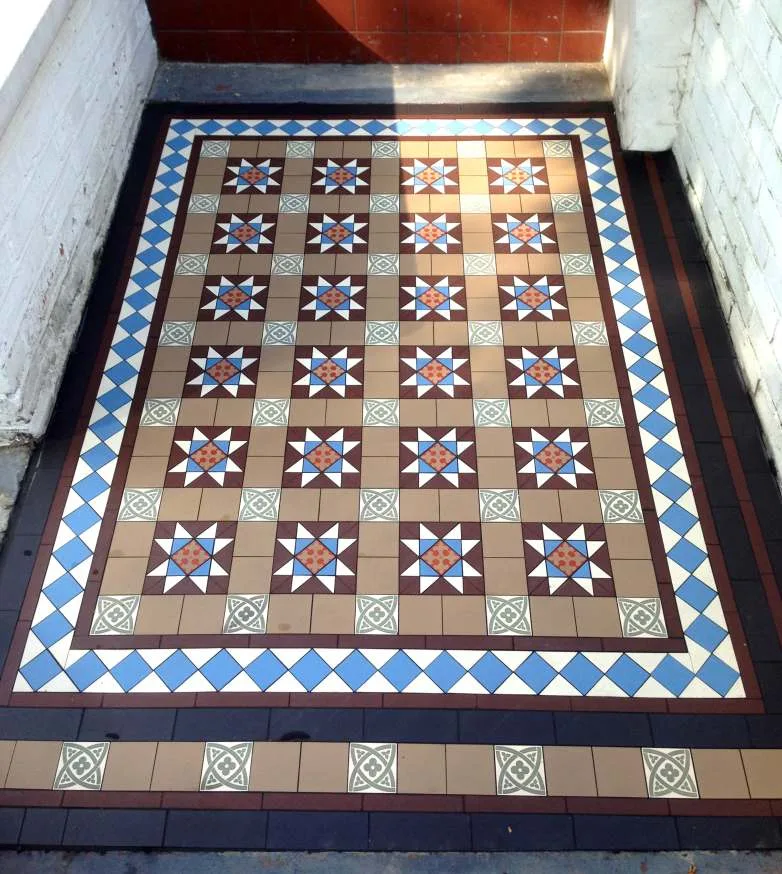
Victorian and geometric floors
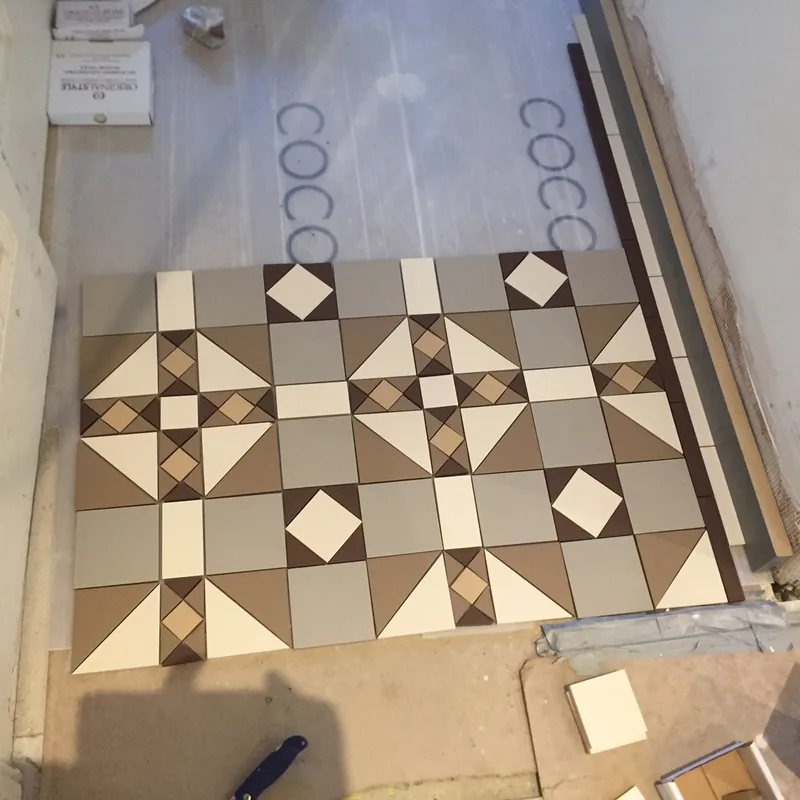
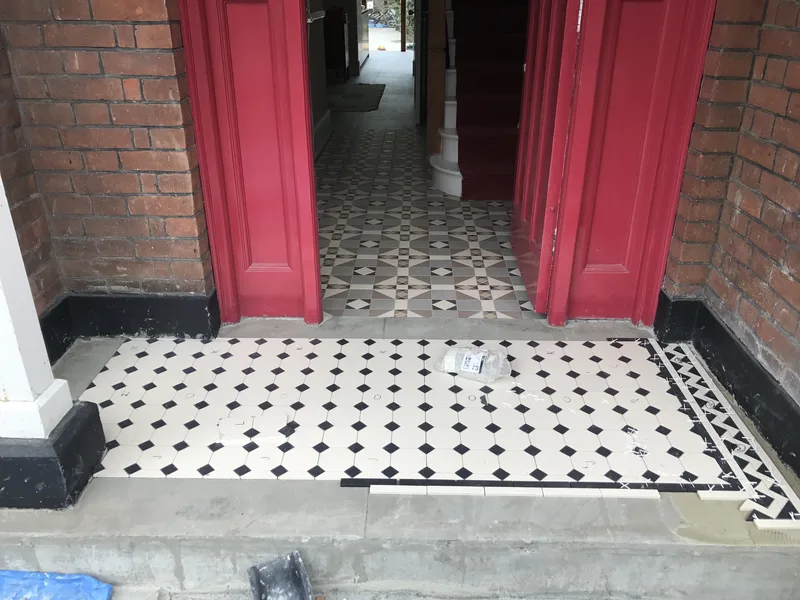
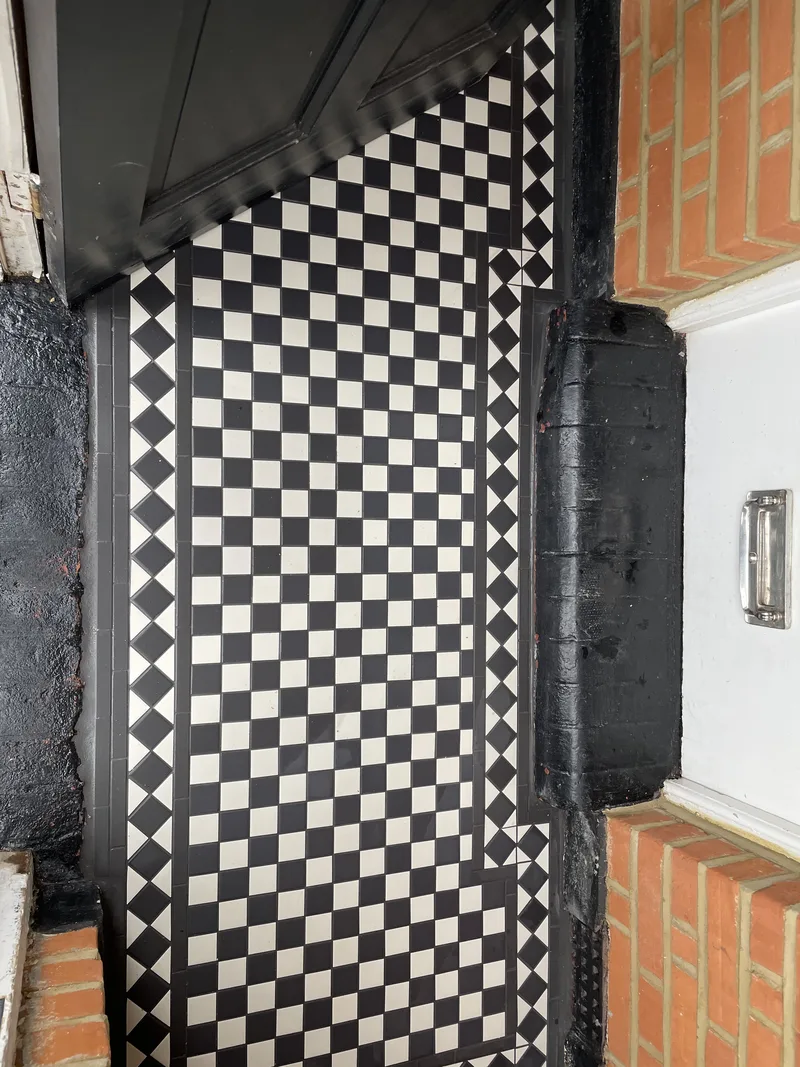
Every photo on this page is our own work. Tap any photo to see it larger.







FAQ
Questions clients ask
Straight answers. For anything specific to your project, call 07842 424614 or send an enquiry.
What is the difference between geometric and encaustic tiles?
Geometric tiles are plain, one colour all the way through, cut in shapes such as triangles and lozenges. Encaustic tiles have a pattern inlaid in coloured clay. Many Victorian floors use both together.
Can you lay a Victorian floor outside, on a front path?
Yes. The path needs a reinforced concrete or screed base, fully cured and laid to a fall so rainwater runs away from the house. We check the base first and advise what is needed.
How do I look after a Victorian floor?
Sweep or vacuum regularly and mop with warm water and a pH-neutral cleaner. Avoid bleach, vinegar, acid cleaners and scouring pads. Where the tiles need it, the floor is sealed with a breathable impregnating sealer and resealed every few years in busy areas. Never use varnish or a plastic-style coating, as it can trap damp under the floor.
Can you match or extend an existing Victorian floor?
Yes. We can lay new tiles to match the pattern and colours of an existing floor, for example when a hallway runs into a new extension.
Do you work outside London?
Yes. Most of our work is in London, but we travel across the UK for specialist mosaic and Victorian floor projects.